What is the first thing that comes to your mind when you are bored or sleepy? Coffee right? do you know that coffee contains caffeine, an alkaloid with amine groups? They block sleep-inducing receptors in the brain. This is how active amines are in our daily lives. Amines are one of the most important classes of organic compounds playing a significant role in biological systems, medicines, and industries. They are widely found in Proteins, Vitamins, and hormones, and are derivatives of ammonia, where one or more hydrogen atoms are replaced by alkyl or aryl groups.
NCERT Exemplar Class 12 Chemistry Solutions Chapter 13: Short Answer Type
NCERT Exemplar Class 12 Chemistry Solutions Chapter 13: Matching Type
NCERT Exemplar Class 12 Chemistry Solutions Chapter 13: Assertion and Reason Type
NCERT Exemplar Class 12 Chemistry Solutions Chapter 13: Long Answer Type
Class 12 Chemistry NCERT Chapter 13: Higher Order Thinking Skills (HOTS) Questions
Approach to Solve Questions of Chapter 13 Amines
Topics and Subtopics of NCERT Exemplar Solutions for Class 12 Chemistry Amines
Advantages of Using Class 12 Chemistry NCERT Exemplar Solutions Chapter 13 Amines
NCERT Exemplar Solutions Class 12 Chemistry Chapter-Wise
NCERT Solutions for Class 12 Chemistry
NCERT Exemplar Class 12 Solutions
NCERT Solution subject-wise
NCERT Notes Subject-Wise
NCERT Books and the NCERT Syllabus
NCERT Exemplar Solutions for Class 12 Chemistry Chapter 13 Amines
NCERT Exemplar Solutions Class 12 Chemistry includes topics like the classification of amines, their nomenclature and physical and chemical properties. Students will also learn about the synthesis and named reaction of amines, which are essential in the production of pharmaceutical drugs, dyes, and polymers. This conceptual clarity is maintained by our subject matter expert in the creation of NCERT Exemplar solutions. The solutions strictly align with the syllabus and curriculum of CBSE class 12 and the step-by-step approach to the solution of the numerical and reaction-based questions ensures that the students can acquire maximum knowledge. Follow NCERT Solutions for better understanding of these concepts.
The first section containes MCQs for quick revision of concepts of Class 12 Chemistry chapter 13 Amines are provided which are important for both boards and competitive exams and helps you to improve your conceptual thinking and problem-solving ability.
The amine group is considered a functional group that modifies the parent hydrocarbon chain. In the compound $\mathrm{CH}_2=\mathrm{CHCH}_2 \mathrm{NHCH}_3$, the amine is a substituted primary amine, so the longest chain is numbered from the end closer to the $-\mathrm{NHCH}_3$ group to give it the lowest possible number.
$(CH_{3})_{2}NH$ is a $2^{o}$ amine and $CH_{3}NH_{2}$ is a $1^{o}$ amine, therefore $(CH_{3})_{2}NH$ is more basic than $CH_{3}NH_{2}$. And because of –I effect of CN group, $NC-CH_{2}NH_{2}$ is less basic than $CH_{3}NH_{2}$. Moreover, $C_{6}H_{5}NHCH_{3}$ is the least basic and less basic than $CH_{3}NH_{2}$ and $(CH_{3})_{2}NH$; it is due to delocalisation of lone pair electrons that are present in nitrogen atom into the benzene ring. Therefore, the decreasing order of amines will be: $\left ( CH_{3} \right )_{2}NH>CH_{3}NH_{2}>C_{6}H_{5}NHCH_{3}>NC-CH_{2}NH_{2}$
$S_{N}1$ is a two-step reaction. At first, $R-X$ bond is broken, which produces carbocation. Then nucleophile attacks the carbocation. The more the stability of carbocation, the more will be the rate of reaction. Benzylic halides are highly reactive towards $S_{N}1$ reactions.
$\mathrm{LiAlH}_4$ in ether is not suitable for reducing aryl nitro compounds to amines because it is ineffective in reducing the nitro group directly on an aromatic ring. Catalytic hydrogenation ( $\mathrm{H}_2 / \mathrm{Pt}$ ) or metal-acid reductions ( $\mathrm{Fe} / \mathrm{HCl}$ or $\mathrm{Sn} / \mathrm{HCl}$ ) are more effective for such conversions.
The number of carbon atoms increases with the help of $\text {KCN}$. The alkyl halide reacts with KCN to form a nitrile $(\mathrm{R}-\mathrm{CN})$, which is then reduced to a primary amine.
Question 8.The source of nitrogen in Gabriel synthesis of amines is _____________.
(i) Sodium azide, $\text {NaN}_{3}$
(ii) Sodium nitrite, $\text {NaNO}_{2}$
(iii) Potassium cyanide, $\text {KCN}$
(iv) Potassium phthalimide, $\text {C}_{6}\text {H}_{4}\left ( \text {CO} \right )_{2}\text N^-K^+$
Answer:
Option (iv) is the correct answer.
In Gabriel's synthesis, Potassium Phthalimide is the source of nitrogen.
Question 9. Amongst the given set of reactants, the most appropriate for preparing 2° amine is _____.
(i) 2° $\text {R-Br+NH}_{3}$
(ii) 2° $\text {R-Br+NaCN}$ followed by $\text {H}_{2}/\text {Pt}$
(iii) 1° $\text {R-NH}_{2}+\text {RCHO}$ followed by $\text {H}_{2}/\text {Pt}$
(iv) 1° $\text {R-Br}\left ( \text {2 mol} \right )+$ potassium phthalimide followed by $\text {H}_{3}\text {O}^{+}$/heat
Answer:
Option (iii) is the correct answer.
A primary amine reacts with an aldehyde (RCHO) to form an imine (Schiff base) which is then reduced (e.g., by $\mathrm{H}_2 / \mathrm{Pt}$ ) to form a secondary amine. This is an efficient method for synthesizing $2^{\circ}$ amines.
$\mathrm{LiAlH}_4$ in ether is a strong reducing agent that converts amides to amines efficiently. So, 2-phenylpropanamide is reduced to 2-phenylpropanamine using this reagent.
$\mathrm{NaOH} / \mathrm{Br}_2$ (Hofmann bromamide reaction) removes one carbon from the amide and forms a primary amine. So, 2-phenylpropanamide (3 carbon chain) is converted to 1phenylethanamine (2 carbon chain amine).
The Hoffmann Bromamide Degradation is a reaction where a primary amide is converted to a primary amine with one less carbon atom in the presence of Br2 and a strong base like NaOH or KOH.
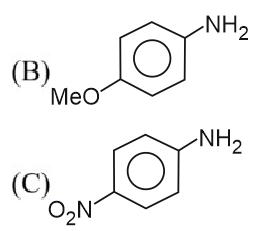
Option (iv) is the correct answer. Explanation: The basic strength is decreased with electron-withdrawing groups, and it is increased with electron releasing groups of aniline.
Option (iii) is the correct answer. Explanation: The process of nitration is initiated by $\text {NO}_{2}^+$ (Nitronium Ion) electrophile. It is then obtained as: $H_{2}SO_{4}\left ( conc. \right )\rightarrow H^{+}+HSO_{4}^{-}$ $H^{+}+HNO_{3}\rightarrow H_{2}NO_{3}^{+}$ $H_{2}NO_{3}^{+}\rightarrow NO_{2}^{+}+H_{2}O$
Option (ii) is the correct answer. Explanation: The reactivity towards dilute $HCl$ is more if the strength of the base is more. Therefore,$\left ( CH_{3} \right )_{2}NH$ has the highest basic strength.
Option (ii) is the correct answer. Explanation: To get primary amines from alkyl halide without changing the number of carbon atoms, Gabriel Phthalimide synthesis is used.
Option (iv) is the correct answer. Explanation: Diazonium Chloride is a very weak electrophile; therefore, it reacts with any electron rich compound which contains electron donating groups; $-OH, -NO_{2}, -OCH_{3}$. The compounds should not contain electron withdrawing groups like: $-NO_{2}$, etc.
Option (iii) is the correct answer. Explanation: All the amines have a tendency to accept protons, therefore are stronger Bronsted Bases than phenols and alcohols. And since phenol is much more acidic than alcohol, Phenols have fewer tendencies to accept any proton. Hence the weakest.
Option (iv) is the correct answer. Explanation:$NH_{3}$ is a stronger base than aniline because of the delocalisation of the lone pair of electrons at N-atom and into the Benzene Ring. And in Pyrrole, as the lone pair electrons on N-atom donate to aromatic sextet formation, it is not basic at all. Hence, Pyrrolidine accepts the proton readily while also being the strongest base.
Option (i) is the correct answer. Explanation: The electronegativity of $O$ is more than $N$ atom; therefore, $O-H$ bond is more polar than $N-H$ bond. Therefore, $O-H$ is more acidic than the $N-H$ bond. $NH_{2}^-$ and $OH^-$, both have a negative charge, and because of that, they are more basic than $NH_{3}$ and $H_{2}O$.
Option (ii) is the correct answer. Explanation: The boiling points of 1° and 2° amines are higher than 3° amines because of intermolecular H-Bonding. They are also less volatile than 3° amines and hydrocarbons of similar molecular mass.
MCQ-type questions are covered to improve your conceptual thinking and problem-solving ability. These questions from NCERT Exemplar Class 12 Chemistry chapter 13 Amines further enhance exam preparation.
Option (iii) and (iv) are the correct answers. Explanation: Using Sandmeyer's reaction, Chloro and Bromo arenes are prepared. And by simply warming Diazonium salt solution with aqueous $KI$ solution, Iodarenes can be prepared. Fluoroarenes are made using Balz-Schiemann reaction. All other reagents give off aniline.
Option (i), (ii) and (iii) are the correct answers.
$\mathrm{Sn} / \mathrm{HCl}, \mathrm{Fe} / \mathrm{HCl}$, and $\mathrm{H}_2 / \mathrm{Pd}$ effectively reduce nitrobenzene to aniline via complete reduction of the NO2 group. $\mathrm{Sn} / \mathrm{NH}_4 \mathrm{OH}$ being mildly reducing and in basic medium, does not efficiently convert nitrobenzene to aniline.
Option (i) and (ii) are the correct answers. Explanation: Amine when reacts with a mixture of $\text {CHCl}_{3}$ and $\text {KOH}$ gives out alkyl isocyanate. This reaction is called a Carbylamine reaction.
Here, $\text {R-NH}_{2}+\text {CHCl}+\text {3KOH}\rightarrow \text {RNC}+\text {3KCl}+\text {3H}_{2}\text {O}$ Only $\text {RNC}$ and $\text {CHCl}_{3}$ are involved in carbylamine reaction.
Option (i) and (ii) are the correct answers. Explanation:$(CH_{3})_{2}CH-CH_{2}NH_{2}$ and $C_{6}H_{5}CH_{2}NH_{2}$ are the primary aliphatic amines that can be prepared by Gabriel synthesis. $2^{o}$ amines are $C_{6}H_{5}CH_{2}NHCH_{3} (C)$ and $1^{o}$ amine, $C_{6}H_{5}NH_{2}$ cannot be prepared by this process.
Options (i) and (iii) are the correct answers. Explanation : $CH_{3}CH_{2}NH_{2}+NH_{4}Cl$
Question 36.Under which of the following reaction conditions, aniline gives p-nitro derivative as the major product?
(i) Acetyl chloride/pyridine followed by reaction with $conc. H_{2}SO_{4} + conc. HNO_{3}$
(ii) Acetic anhydride/pyridine followed by $conc. H_{2}SO_{4} + conc. HNO_{3}$
(iii) Dil. HCl followed by reaction with $conc. H_{2}SO_{4} + conc. HNO_{3}$
(iv) Reaction with $conc. HNO_{3}+conc. H_{2}SO_{4}$ Answer:
Option (i) and (ii) are the correct answers. Explanation: When aniline reacts with acetyl chloride or acetic anhydride in the presence of pyridine produces N-acetyl aniline. This is a ortho, para directing group which produces p-nitroaniline on reaction with nitrating mixtures. As shown below:
Option (i) and (ii) are the correct answers. Explanation: Nucleophilic substitution reaction where $-NH_{2} \; and\; H$$�NH_{2} \; and\; H$ atoms are replaced by acyl groups is known as Acylation. Diazotisation is also a type of nucleophilic substitution reaction.
Confused between CGPA and Percentage?
Get your results instantly with our calculator!
💡 Conversion Formula used is: CGPA = Percentage / 9.5
NCERT Exemplar Class 12 Chemistry Solutions Chapter 13: Short Answer Type
Short-answer type questions are covered to improve your problem-solving ability. These Chapter 13 Amines important questions help in building a strong foundation for board and competitive exams.
The 1:1 solution of $\text {HNO}_{3}$ and $\text {H}_{2}\text {SO}_{4}$ is a nitrating mixture, and it is used for nitration of organic compounds. This mixture acts as a base which provides electrophile in the nitration process of benzene.
The $\text {NH}_{2}$ group of aniline is acetylated before carrying out the nitration for controlling the nitration reaction, carry oxidation products and nitro derivative products formation.
As the acetyl group is an electron-withdrawing group, it attracts the lone pair of the electrons in the N atom towards the carbonyl group.
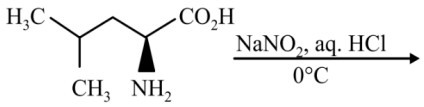
$\text {HNO}_{2}$ is reacted $\text {C}_{6}\text {H}_{5}\text {CH}_{2}\text {NH}_{2}$ which forms unstable diazonium salt, and in turn, alcohol is given out. This is the reaction: $\text {C}_{6}\text {H}_{5}\text {CH}_{2}\text {NH}_{2}+\text {HNO}_{2}\rightarrow \text {C}_{6}\text {H}_{5}\text {CH}_{2}\text {OH}+\text {N}_{2}+\text {H}_{2}\text {O}$
$\text {LiAlH}_{4}$ and Sodium/Alcohol are the best reagents for the conversion of nitrile to a primary amine. And nitriles can be converted into a corresponding primary amine using reduction.
$\text {C}_{6}\text {H}_{5}\text {SOCl}$ aka Benzene sulphonylchloride is known as Hinsberg's reagent. It is used to differentiate between primary, secondary and tertiary amines.
Benzene Diazonium is very stable at low temperatures and highly soluble in water at high temperatures. It is recommended to use it immediately after its preparation as it is unstable.
The activating effect of $\text {-NH}_{2}$ group of aniline is reduced by its acetylation. It happens because of the lone pair electrons on the nitrogen of acetanilide react with oxygen atom because of resonance.
$\text {MeOH}$ is a weaker base than $\text {MeNH}_{2}$ because $\text {MeNH}_{2}$ has lower electronegativity and has lone pair electrons present on the nitrogen atom.
By acylation of $\text {-NH}_{2}$ group with acetic anhydride in the presence of pyridine and after that carrying substitution followed with hydrolysis of the substituted amide with the substituted amine, the activating effect of $\text {-NH}_{2}$ group can be controlled. $\text {HCl}$ is a side product, which is removed with the help of pyridine as a base.
The reaction is performed in a mild basic medium and known as electrophilic substitution reaction. Aniline and Aryldiazonium chloride react to form a yellow dye of p-Aminoazobenzene.
When aniline and bromine react in a non-polar solvent, such as $\text {CS}_{2}$, non-polar products are formed that are 4-Bromoaniline and 2-Bromoaniline in which 4-Bromoaniline is present in the majority.
$\text {CH}_{3}\text {CH}_{2}\text {CH}_{3}<\text {CH}_{3}\text {CH}_{2}\text {NH}_{2}<\text {CH}_{3}\text {CH}_{2}\text {OH}$ $\text {CH}_{3}\text {CH}_{2}\text {OH}$ has dipole moment greater than $\text {CH}_{3}\text {CH}_{2}\text {NH}_{2}$. Whereas,$\text {CH}_{3}\text {CH}_{2}\text {CH}_{3}$ has the least dipole moment amongst the three compounds. $\text {CH}_{3}\text {CH}_{2}\text {CH}_{3}$ is an almost non-polar molecule.
Solid, insoluble alkali is given off when compound Z with molecular formula $\text {C}_{3}\text {H}_{9}\text {N}$ and is an aliphatic amine on treatment with $\text {C}_{6}\text {H}_{5}\text {SO}_{2}\text {Cl}$. And hence, the product does not have any replaceable hydrogen on its nitrogen atom. The amine (Z) should be a secondary amine which means Z is ethyl methylamine $(\text {C}_{2}\text {H}_{5}\text {NHCH}_{3})$.
$\begin{array}{lcc}\mathrm{R}-\mathrm{NH}_2+\mathrm{CHCl}_3+3 \mathrm{KOH} \rightarrow \mathrm{R}-\mathrm{NC} \xrightarrow[\text { (Reduction) }]{\mathrm{H}_2 / \mathrm{Pd}} \mathrm{R}-\mathrm{NH}-\mathrm{CH}_3 \\ 1^{\circ} \text { Amine } \quad \text { Alkyl isocyanide } & 2^{\circ} \text { Amine }\end{array}$
Carbylamine reaction is shown by $1^{o}$ amine only which result in the replacement of two hydrogen atoms attached to N atom of $-\text {NH}_{2}$ group by one carbon atom to form isocyanide. On catalytic reduction, the isocyanide will give a secondary amine with one methyl group.
This reaction is an example of electrophilic aromatic substitution. Phenol forms phenoxide ion in an alkaline medium, which is more electron-rich than phenol and therefore more reactive in the electrophilic attack. Arydiazonium cation is electrophile in this reaction, and p-Nitrophenyldiazonium cation is a stronger electrophile than p-toluene diazonium cation. Hence, it pairs preferentially with phenol.
NCERT Exemplar Class 12 Chemistry Solutions Chapter 13: Matching Type
Matching-type questions are covered to improve conceptual clarity and topic awareness. Such exercises in NCERT Exemplar Class 12 Chemistry chapter 13 Amines strengthen understanding.
NCERT Exemplar Class 12 Chemistry Solutions Chapter 13: Assertion and Reason Type
Assertion and Reason type questions are covered to improve your critical thinking and problem-solving solving ability.These are an important part of Chemistry Class 12 NCERT Exemplar Chapter 13 Amines, helping students prepare effectively for board and competitive exams.
(iii) Assertion is correct statement but reason is wrong statement.
The assertion is correct because acylation of an amine converts it into an amide, and amides are much less nucleophilic at nitrogen, so further acylation is discouraged and you end up with a monosubstituted product.
The given reason is incorrect. The prevention of further acylation is mainly electronic (resonance delocalisation of the lone pair into the carbonyl and electron withdrawal by the acyl group), not primarily due to steric hindrance.
Ethylbenzene sulphonamide is soluble in alkali because it has acidic hydrogen.
Hence (iv) Both assertion and reason are correct statements and reason is correct explanation of assertion.
N, N-diethyl benzene sulphonamide is not soluble in alkali as it there is no acidic hydrogen present on this. Sulphonyl group is an electron-withdrawing group which is attached to a nitrogen atom.
Hence, (ii) Both assertion and reason are correct statements but reason is not correct explanation of assertion.
$\text {Fe}+\text {2HCl}\rightarrow \text {FeCl}_{2}+\text {2[H]}$
Nacent hydrogen is reduced into nitro compounds. $\text {FeCl}_{2}+\text {H}_{2}\text {O}\text {(g)}\rightarrow \text {FeO}+\text {2HCl}$
Hence, (iv) Both assertion and reason are correct statements and reason is correct explanation of assertion.
(iv) Both assertion and reason are correct statements and reason is correct explanation of assertion. Both are correct acetylation withdraws nitrogen’s lone pair via resonance, hence acetanilide is less basic than aniline.
NCERT Exemplar Class 12 Chemistry Solutions Chapter 13: Long Answer Type
Long-answer type questions are covered to improve your subject knowledge and conceptual thinking. These Amines NCERT Exemplar Class 12 Chemistry Solutions enhance analytical skills and strengthen exam preparation.
(i) Addition of $\text {HCl}$ to compound 'A' shows that compound 'A' is alkene. Compound 'B' is $\text {C}_{4}\text {H}_{9}\text {Cl}$
(ii) Compound 'B' reacts with $\text {NH}_{2}$, it forms amine 'C'.
$\mathrm{C}_4 \mathrm{H}_8 \xrightarrow{\mathrm{HCl}} \mathrm{C}_4 \mathrm{H}_9 \mathrm{Cl} \xrightarrow{\mathrm{NH}_3} \mathrm{C}_4 \mathrm{H}_{11} \mathrm{~N}$ Or $\mathrm{C}_4 \mathrm{H}_9 \mathrm{NH}_2$
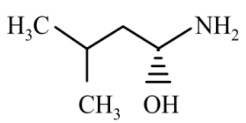
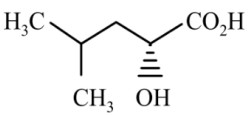
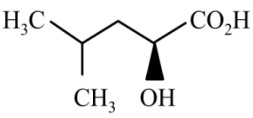
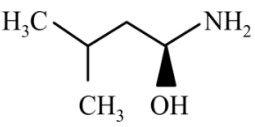
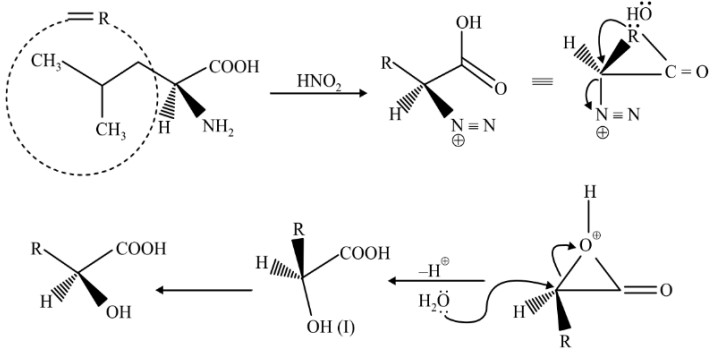
(iii) 'C' gives diazonium salt with $\text {NaNO}_{2}/\text {HCl}$, which yields an optically active alcohol. So, 'C' is aliphatic amine.
(iv) 'A' on Ozonolysis produces 2 moles of $\text {CH}_{3}\text {CHO}.$ So, 'A' is $\text {CH}_{3}-\text {CH}=\text {CH}-\text {CH}_{3}\left ( \text {But-2-ene} \right )$ Reactions :
Class 12 Chemistry NCERT Chapter 13: Higher Order Thinking Skills (HOTS) Questions
Class 12 Chemistry NCERT Exemplar Solutions chapter 13 Amines also includes HOTS-type questions that are covered to improve your problem-solving ability and conceptual thinking. These advanced questions help in developing higher-level analytical skills for exams.
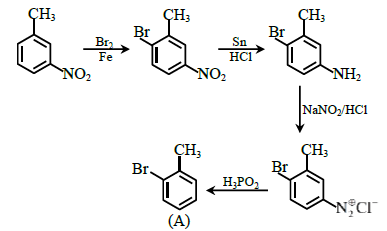
Question 1: Consider the following sequence of reactions to produce major product (A)
Molar mass of product (A) is _______ $\mathrm{g} \mathrm{mol}^{-1}$. (Given molar mass in $\mathrm{g} \mathrm{mol}^{-1}$ of $\mathrm{C}: 12, \mathrm{H}: 1$, $\mathrm{O}: 16, \mathrm{Br}: 80, \mathrm{~N}: 14, \mathrm{P}: 31)$
Answer.
Molar mass of product $\left(\mathrm{C}_7 \mathrm{H}_7 \mathrm{Br}\right)(\mathrm{A})$ is $171 \mathrm{~g} \mathrm{~mol}^{-1}$
Hence, the answer is 171.
Question 2: 9.3 g of pure aniline is treated with bromine water at room temperature to give a white precipitate of the product ' P '. The mass of product ' P ' obtained is 26.4 g. The percentage yield is ......... %.
Answer.
93 g of aniline produces 330 g of 2,4,6-tribromoaniline. Hence, 9.3 g of aniline should produce 33 g of 2, 4, 6-tribromoaniline. Hence percentage yield $\frac{26.4 \times 100}{33}=80 \%$
Hence, the answer is (80%).
Question 3: The correct order of basic nature on aqueous solution for the bases $\mathrm{NH}_3, \mathrm{H}_2 \mathrm{~N}-\mathrm{NH}_2, \mathrm{CH}_3 \mathrm{CH}_2 \mathrm{NH}_2$, $\left(\mathrm{CH}_3 \mathrm{CH}_2\right)_2 \mathrm{NH}$ and $\left(\mathrm{CH}_3 \mathrm{CH}_2\right)_3 \mathrm{~N}$ is :
Choose the correct answer from the options given below :
(1)B $>$ E $>$ D $>$ A $>$ C
(2)E $>$ D $>$ B $>$ A $>$ C
(3) E $>$ D $>$ A $>$ B $>$ C
(4)E $>$ A $>$ D $>$ C $>$ B
Answer:
Aliphatic amines are more basic than aromatic amines, as the lone pair on nitrogen is localized.
E > D > B > A > C
Hence, the correct answer is option (2).
Approach to Solve Questions of Chapter 13 Amines
To effectively solve questions from NCERT Exemplar Class 12 Chemistry chapter 13 Amines, follow a structured and concept-driven approach. Here is a concise and structured approach to follow:
1) Firstly, the understanding of basic concepts is necessary to solve the problems related to amines like
Classification of primary, secondary and tertiary amines.
Classification of Aliphatic and aromatic amines.
IUPAC and common names of compounds
Distinguishing amines from other functional groups
2) Preparation methods are quite important from the exam point of view. Some of them include, Reduction of nitriles, amides, and nitro compounds, Hoffmann Bromamide degradation, Reduction of Nitrobenzene. Students can refer to NCERT Class 12 Chemistry Chapter 13 Amines Notes for better understanding.
3) Carefully study the physical properties of compounds like boiling point, melting point, solubility trends, physical properties and the effect of Hydrogen bonding on them is important.
4) Students can make use of short notes or charts to remember the concepts like Basicity of Amines and the reactions involving amines. Also, the test to distinguish the amines is too crucial, such as the Carbylamine test, Hinsberg's test and Nitrous acid reaction.
5) Solve the problems involving molecular weight, percentage yield and reaction stoichiometry. Also, solve the in-text and exercise problems from NCERT Exemplar Solutions for Class 12 Chemistry Chapter 13 Amines.
Topics and Subtopics of NCERT Exemplar Solutions for Class 12 Chemistry Amines
Important topics of NCERT Exemplar Class 12 Chemistry Chapter 13 are given below:
Advantages of Using Class 12 Chemistry NCERT Exemplar Solutions Chapter 13 Amines
NCERT Exemplar Solutions for Class 12 Chemistry Chapter 13 Amines cover all important concepts from the NCERT book in a simple and organised manner. The advantages of using these solutions of NCERT are given below:
Students can get a clear understanding of the structure, classification, and preparation methods of amines.
These NCERT Exemplar Class 12 Solutions include mechanisms of important reactions like diazotisation and Hoffmann bromamide reaction.
The Class 12 Chemistry NCERT Exemplar Solutions chapter 13 Amines contain key points, tables, and formulas for easy learning.
They are created by subject experts in a very clear and comprehensive way that are helpful in both board and competitive exams.
NCERT Exemplar Solutions Class 12 Chemistry Chapter-Wise
These NCERT Exemplar Solutions for Class 12 Chemistry are designed to help students strengthen their conceptual understanding and problem-solving skills. Here is a list of NCERT chapter-wise solutions:
NCERT Solutions for Class 12 Chemistry are prepared to help students understand complex concepts with ease. Here is a list of NCERT chapter-wise solutions:
Q: Why should one pay attention to this chapter and NCERT exemplar Class 12 Chemistry solutions chapter 13?
A:
Class 12 Chemistry NCERT exemplar solutions chapter 13 covers the topic of amines which is a crucial part of organic chemistry.
Q: How are these NCERT exemplar Class 12 Chemistry chapter 13 solutions helpful?
A:
Students can make the most of these questions and NCERT exemplar solutions for Class 12 Chemistry chapter 13 by understanding the topic better and also these solutions will help in answering the questions asked in the exam.
Q: What all topics are included in this Class 12 Chemistry NCERT exemplar solutions chapter 13?
A:
The entire chapter covers the topic of amines, its properties, types, classification, applications and uses, and the chemical reactions.
Q: What are amines?
A:
Amines are organic compounds derived from ammonia by replacing one or more hydrogen atoms with alkyl or aryl groups. They are characterized by the presence of a nitrogen atom with a lone pair of electrons.
Q: How are amines classified?
A:
Amines are classified based on the number of alkyl or aryl groups attached to the nitrogen atom:
Primary (1°) amines: One alkyl/aryl group attached to the nitrogen. (R-NH₂)
Secondary (2°) amines: Two alkyl/aryl groups attached to the nitrogen. (R₂-NH)
Tertiary (3°) amines: Three alkyl/aryl groups attached to the nitrogen. (R₃-N)
Quaternary Ammonium Salts: Four alkyl/aryl groups attatched to the nitrogen with a positive charge on the nitrogen atom. (R₄N⁺)
Q: Can I skip the NCERT chemistry 13-amines questions?
A:
You should not skip NCERT Chemistry Chapter 13 Amines questions, as they are frequently asked in CBSE and JEE-level exams and help strengthen reaction mechanisms.
Q: What is the structure of an amine, and how does it impact their basicity?
A:
The structure of an amine consists of a nitrogen atom bonded to hydrogen and/or carbon atoms. The presence of lone pair electrons on the nitrogen makes amines basic, as they can accept protons. Basicity varies among types of amines; for example, tertiary amines are generally more basic than primary ones due to steric hindrance affecting the ability to donate their lone pair for protonation.
Q: Can you explain the method of preparation of amines mentioned in Chapter 13?
A:
Class 12 Chemistry chapter 13 Amines explains several methods for preparing amines, including the reduction of nitriles or amides, the alkylation of ammonia, and the reduction of nitro compounds. Each method has its own advantages and is chosen based on the availability of starting materials and desired alkyl groups in the final amine product.
Q: What are the common reactions that amines undergo as mentioned in the Amines NCERT Exemplar Class 12 Chemistry Solutions?
A:
Amine take part in various reactions such as acylation, alkylation, and reactions with acids to form ammonium salts. They can be protonated under acidic conditions, forming ammonium ions. The chapter highlights these reactions, showcasing their utility in synthesizing different organic compounds and the way they interact with other functional groups.
Q: How does the presence of different alkyl groups influence the properties of amines?
A:
The nature of alkyl groups attached to the nitrogen in amines can significantly influence their physical and chemical properties, including boiling points, solubility, and reactivity. For example, larger alkyl groups can lead to increased steric hindrance, affecting the basicity and reactivity of the amine.
You can download the previous
CBSE Class 12 marksheet
through DigiLocker. You can also access your digital marksheet through platforms such as DigiLocker and UMANG.
A block of mass 0.50 kg is moving with a speed of 2.00 ms-1 on a smooth surface. It strikes another mass of 1.00 kg and then they move together as a single body. The energy loss during the collision is
A person trying to lose weight by burning fat lifts a mass of 10 kg upto a height of 1 m 1000 times. Assume that the potential energy lost each time he lowers the mass is dissipated. How much fat will he use up considering the work done only when
A pulley of radius 2 m is rotated about its axis by a force F = (20t - 5t2) newton (where t is measured in seconds) applied tangentially. If the moment of inertia of the pulley about its axis of rotation is 10 kg m2 , the




 and its IUPAC name is prop-2-en-1-amine.
 N, N-Dimethylbenzenamine