


NCERT Class 9 Maths Chapter 6 Notes Lines and Angles - Download PDF
The chapter Lines and Angles provides the first introduction to geometrical fundamentals. The chapter explores the basic geometric elements that begin with points, lines, and rays. It continues to explain the various types of angles produced by transversal intersections or cuts of lines. Basic geometric understanding depends on these core concepts for learning advanced mathematical shapes that appear later in the textbook. The primary benefit of these NCERT notes for class 9 Maths is that they present concepts clearly and straightforwardly, making learning easier and more effective.
This Story also Contains
- Class 9 Chapter 6 Lines and Angles Notes PDF – Download Free Study Material
- NCERT Notes Class 9 Maths Chapter 6 Lines and Angles
- Basic Terms and Definitions
- How to Use the Lines and Angles Class 9 Notes Effectively?
- NCERT Class 9 Maths Notes – Chapter-Wise Links
- NCERT Books and Syllabus
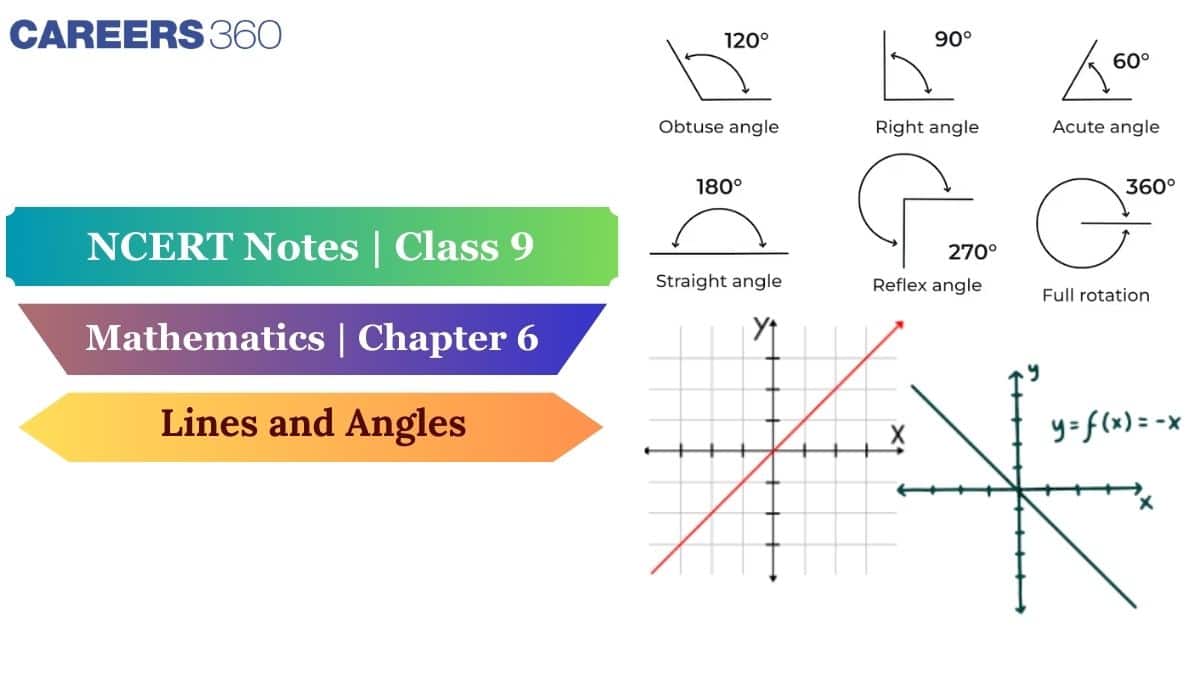
The chapter covers four angle types - acute, right, obtuse, and straight, as well as complementary, supplementary, adjacent and vertically opposite angle pairs. The study of lines intersecting with transversals results in the evaluation of corresponding angles and alternate interior angles, along with other angle properties. All advanced geometry studies require a fundamental understanding of these concepts. These NCERT notes are trustworthy and reliable, as they are created by subject matter experts at Careers360, making them an essential resource for exam preparation. Check this NCERT article for complete syllabus coverage along with NCERT Books, Solutions, Syllabus, and Exemplar Problems with Solutions.
Also, read,
Class 9 Chapter 6 Lines and Angles Notes PDF – Download Free Study Material
Careers360 brings you NCERT Class 9 Maths Chapter 6 Lines and Angles notes, carefully prepared by subject experts to simplify your studies and help in exams. A downloadable PDF is available — click the link below to access it.
NCERT Notes Class 9 Maths Chapter 6 Lines and Angles
These NCERT notes for Class 9 Maths Chapter 6 Lines and Angles have been prepared by Careers360 experts to make learning simpler and to help you score better in exams.
Confused between CGPA and Percentage?
Get your results instantly with our calculator!
Basic Terms and Definitions
Line Segment
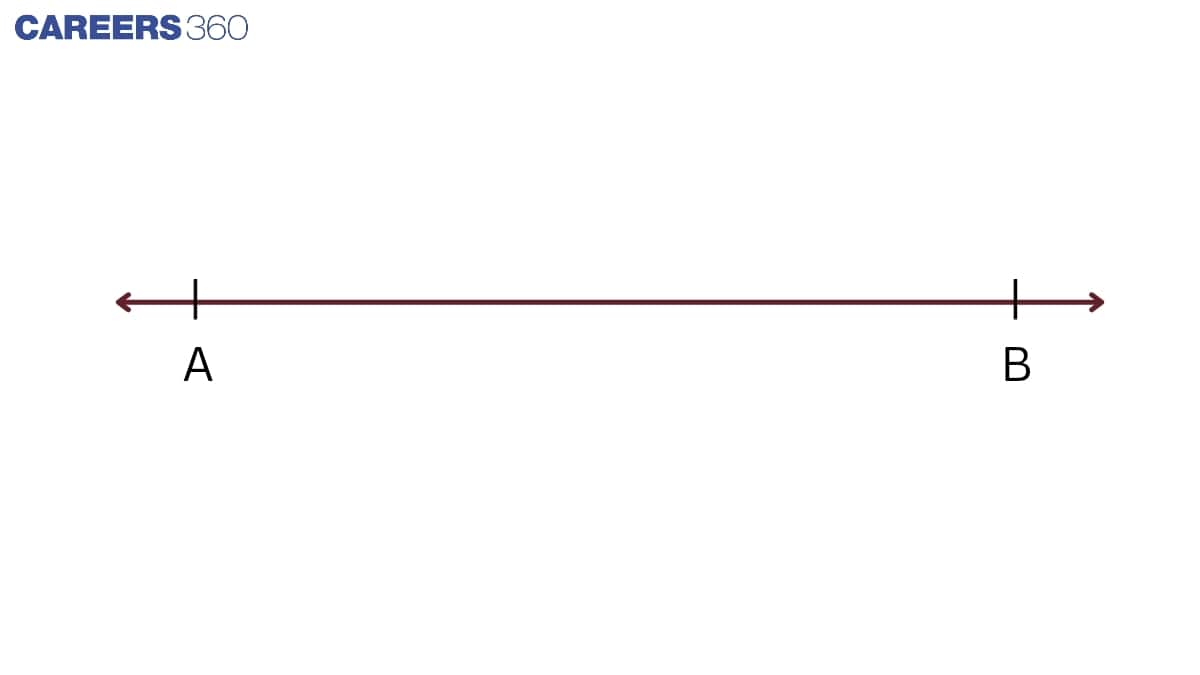
A portion of the line with two endpoints is called a line segment. It is denoted by the symbol $\overline{AB}$.
Ray
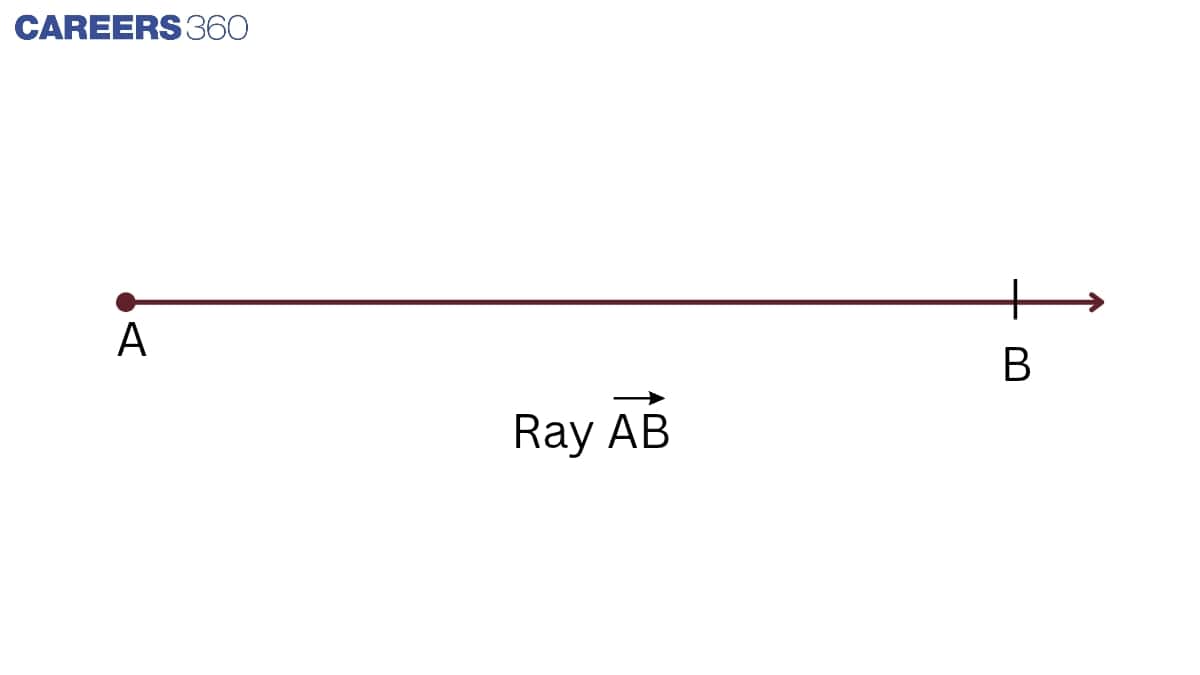
A part of the line with one endpoint and the other endpoint extending up to infinity. It is denoted by the symbol $\overrightarrow{AB}$.
Collinear Points
If three or more points lie on the same line, they are called collinear points.
Non-Collinear Points:
If three or more points do not lie on the same line, they are called non-collinear points.
Angle
An angle is generated when two rays originate from the same point. The rays making an angle are called the arms of the angle, while the vertex refers to the place where they end.
Types of Angles
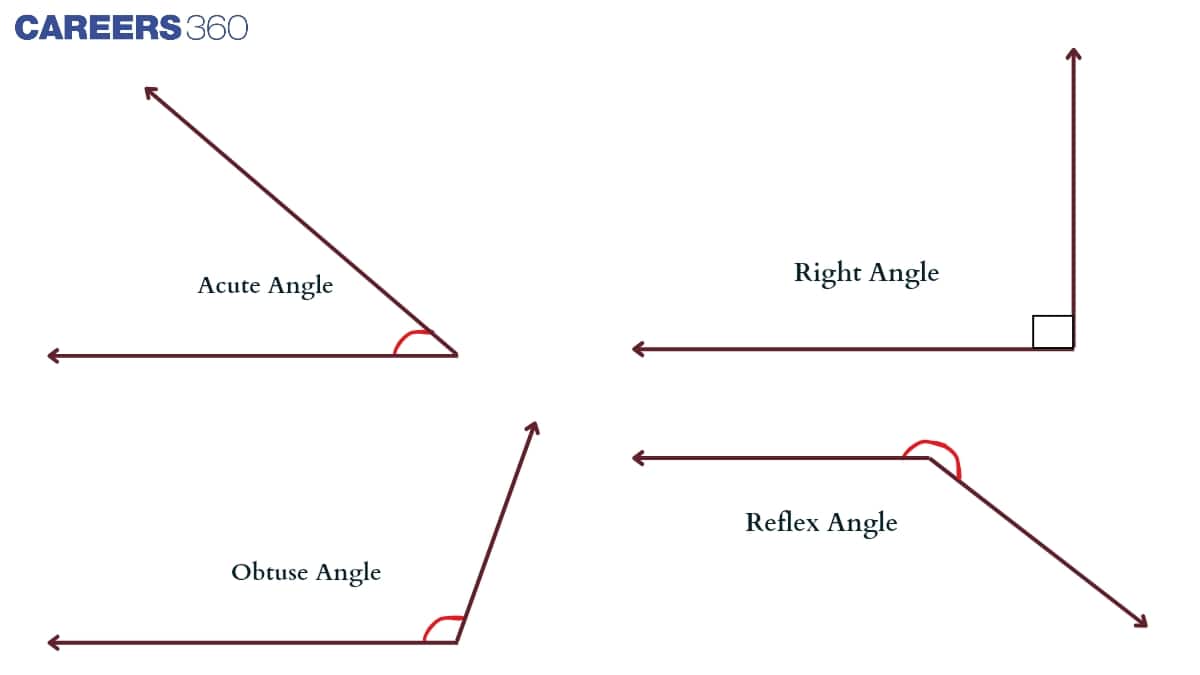
In geometry, there are several types of angles. The fundamental component of geometry in Mathematics is the angles.
- Acute Angle: Measures greater than 0° and less than 90°. It means acute angles are when: 0° < angle < 90°.
- Right Angle: Measures equal to 90°. It means right angles are when: Angle = 90°.
- Obtuse Angle: Measures greater than 90° and less than 180°. It means obtuse angles are when: 90° < angle < 180°.
- Straight Angle: Measures equal to 180°. It means straight angles are when: Angle = 180°.
- Reflex Angle: Measures greater than 180° and less than 360°. It means reflex angles are when: 180° < angle < 360°.
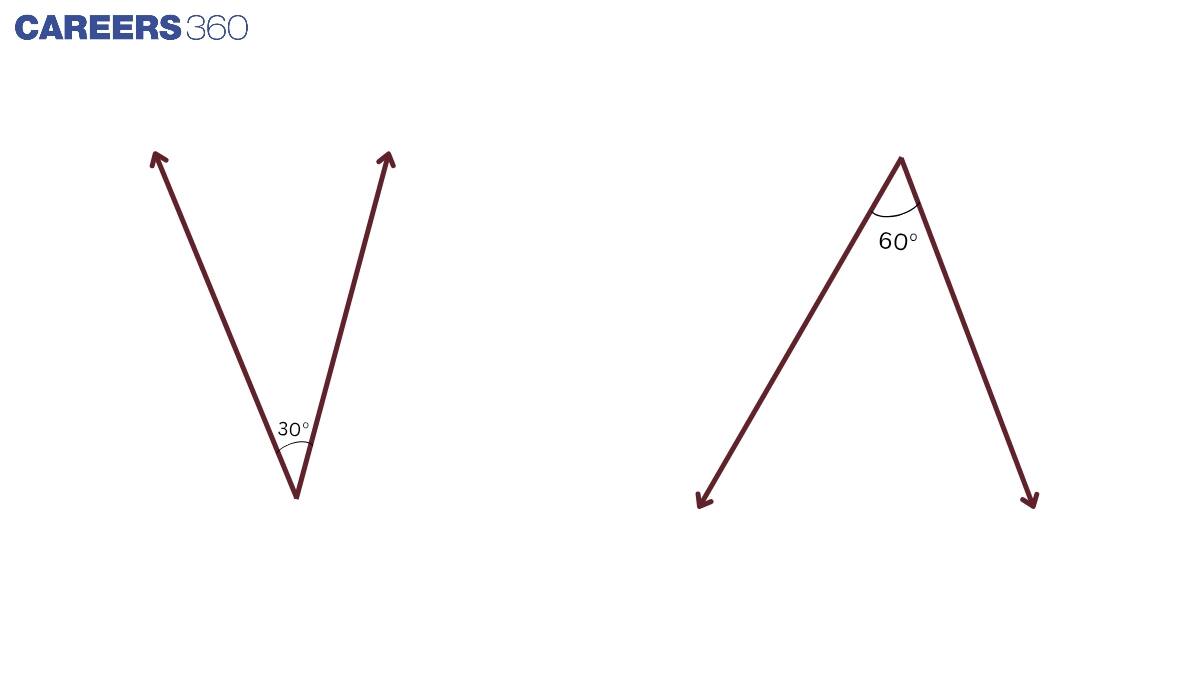
Complementary Angles
When the sum of two angles is 90°, they form up complementary angle.
Supplementary Angles
When the sum of two angles is 180°, they form up supplementary angle.
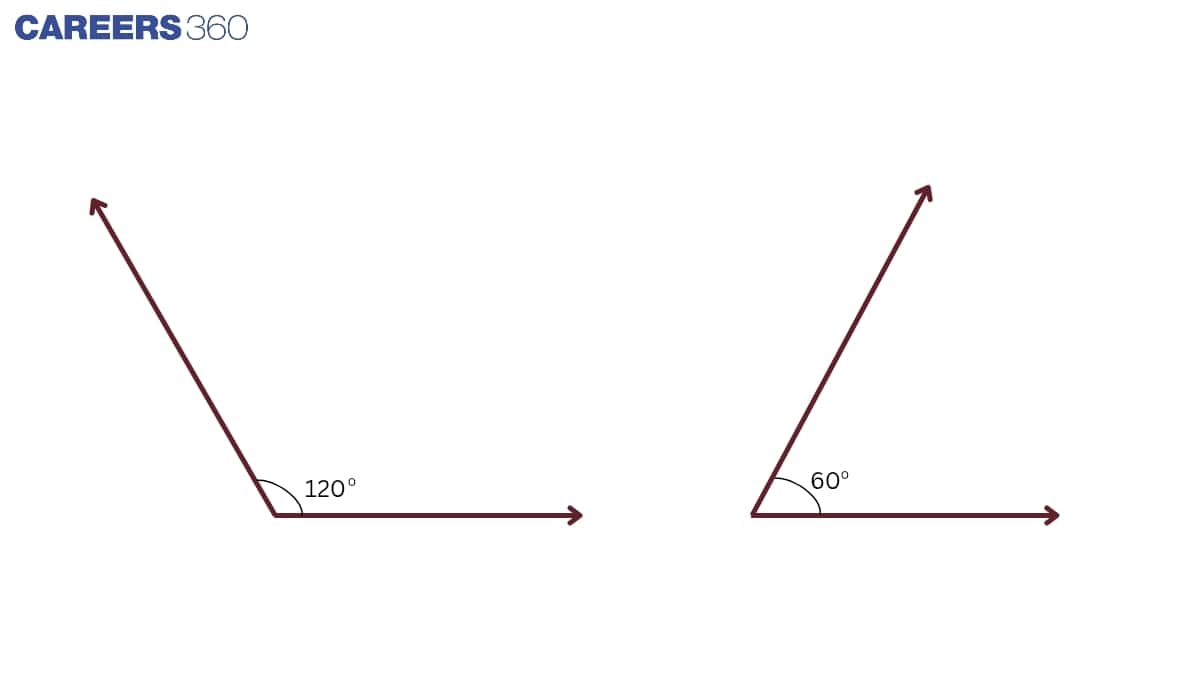
Adjacent Angles
If angles have a common vertex, a common arm, and their non-common arms are on different sides of the common arm, they are called adjacent angles.
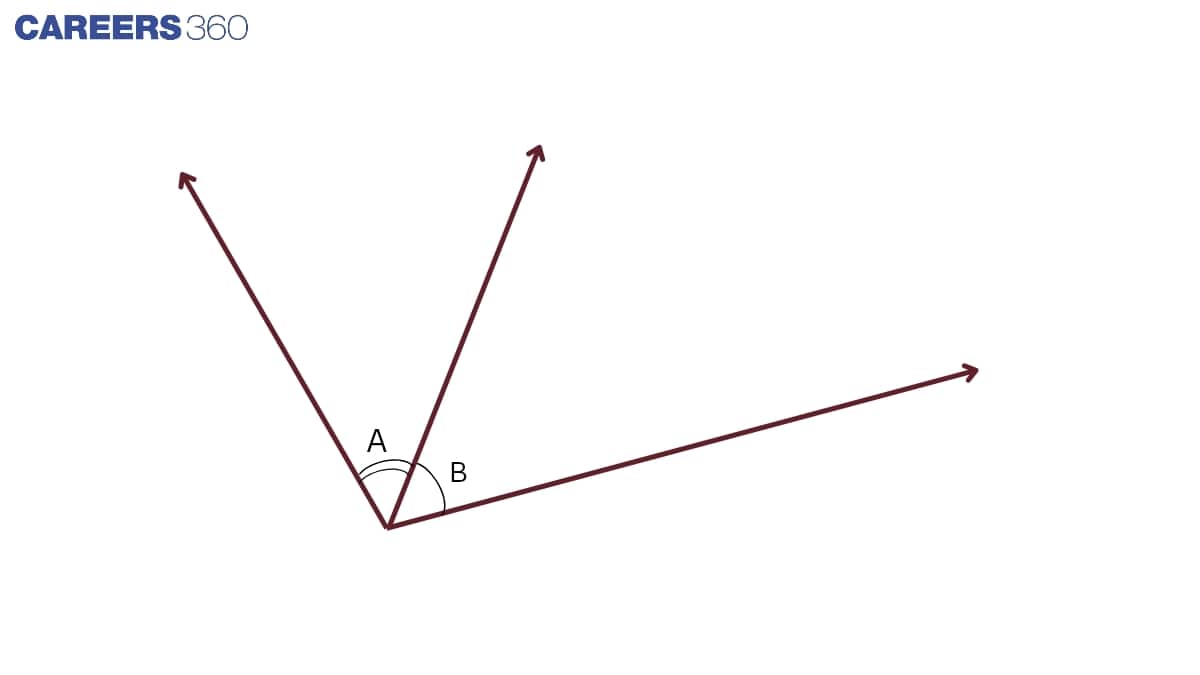
Linear pair of angles
A pair of adjacent angles whose non-common sides create a straight line that adds up to 180°.
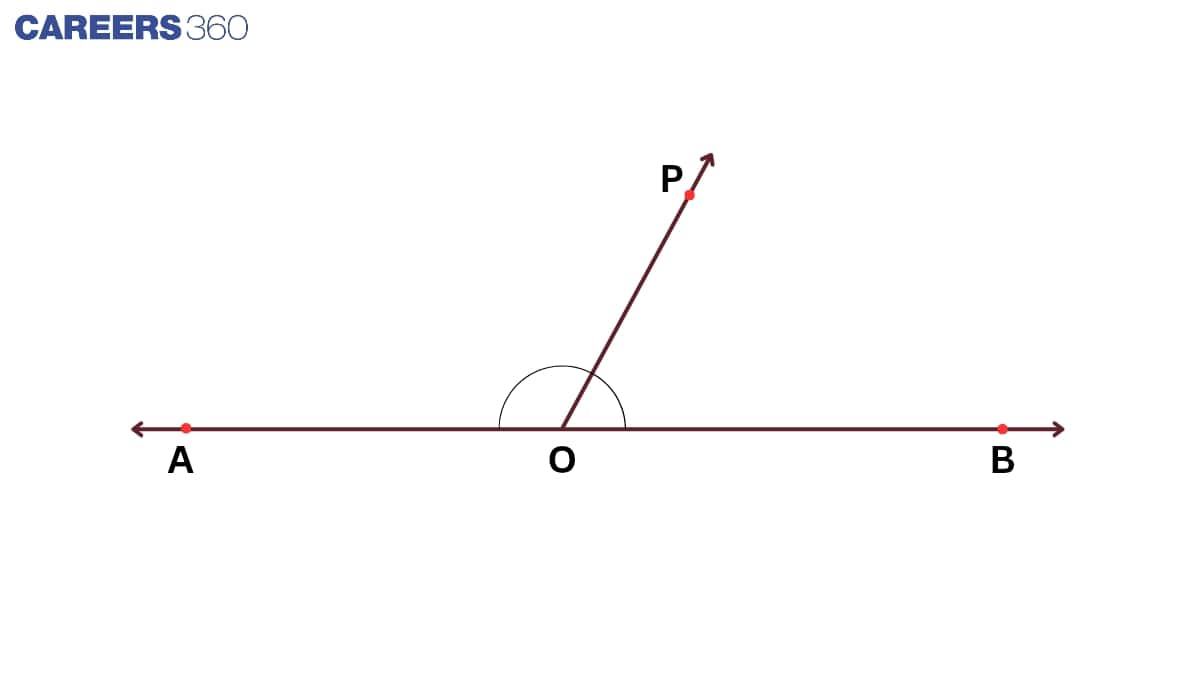
Vertical Opposite angles
If two lines intersect each other at a point, they form vertically opposite angles which are equal to each other. Like in the given figure, angles a and c, b and d are vertically opposite angles.
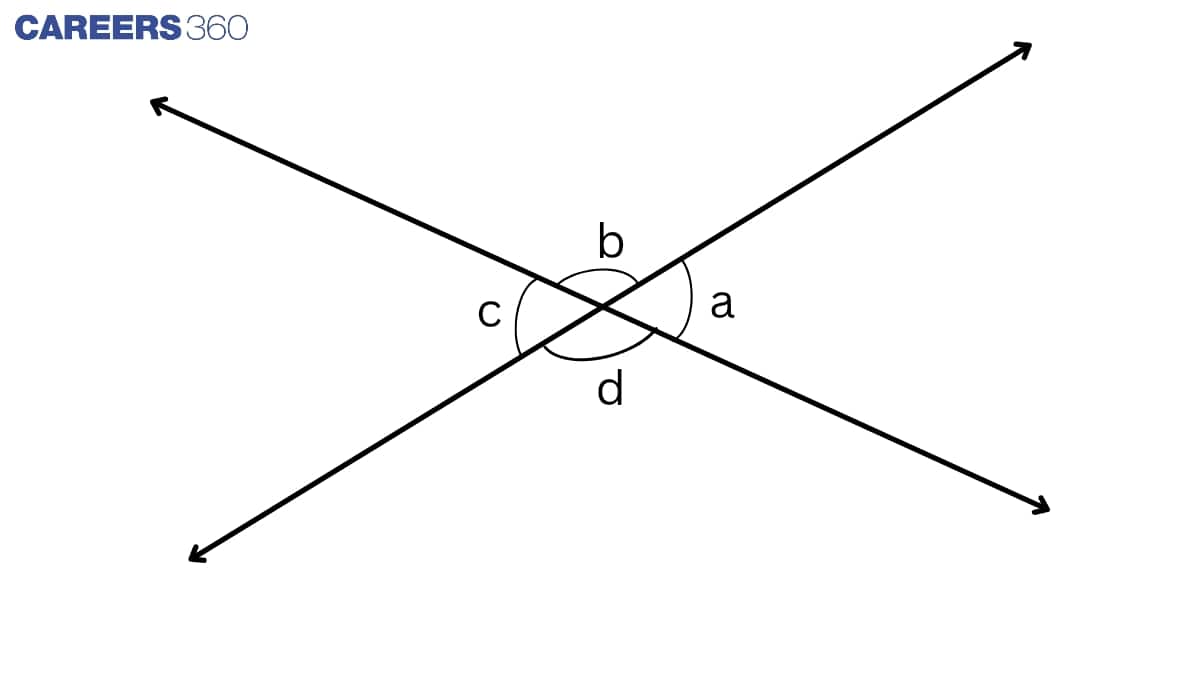
Intersecting Lines
When the lines cross each other at a single point, they are called Intersecting lines.
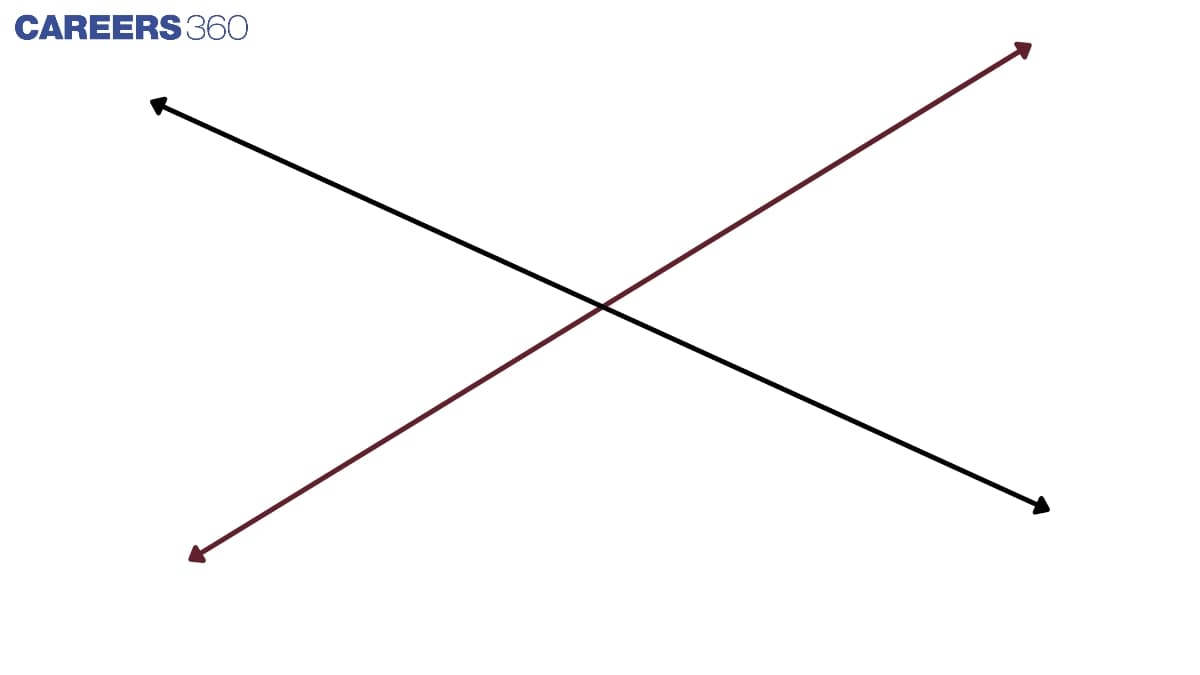
Non-Intersecting Lines
When the lines are parallel to each other, or do not intersect, they are called non-intersecting lines.
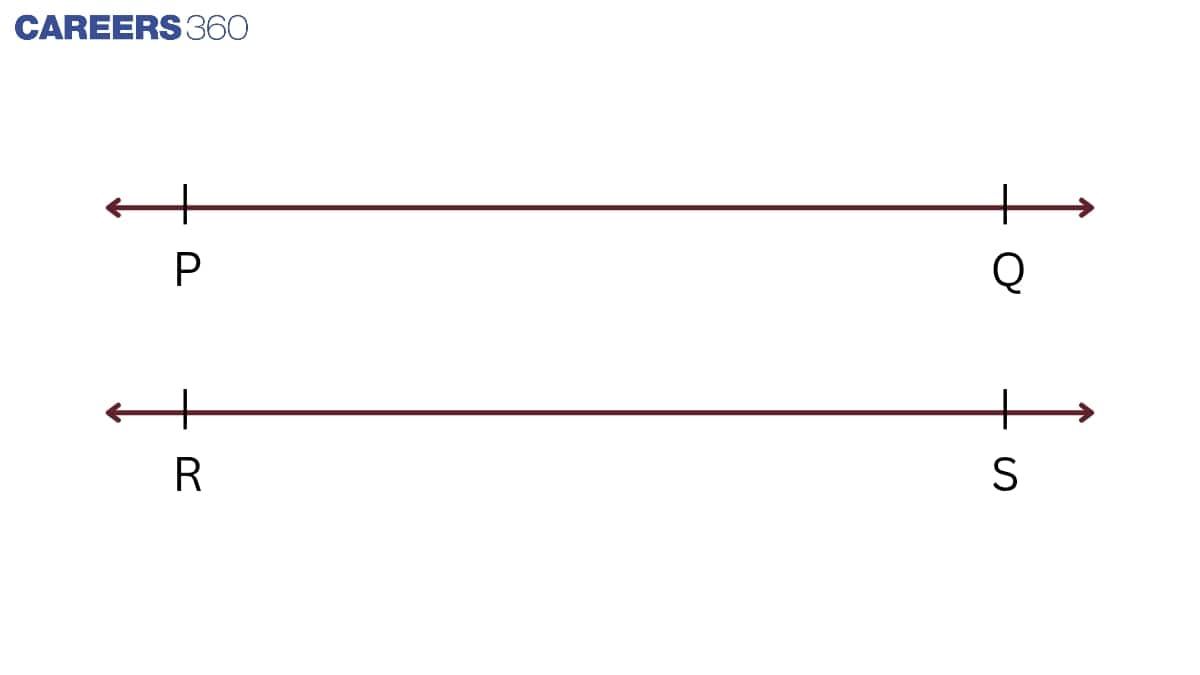
Pair of Angles Axioms
Axiom - Linear Pair of Angles:
If a ray stands on a line, then the sum of two adjacent angles so formed is 180°.
Axiom - Converse of Linear Pair of Angles:
If the sum of two adjacent angles is 180°, then the non-common arms of the angles form a line.
Vertically Opposite Angles Theorem:
If two lines intersect each other, then the vertically opposite angles are equal.
Parallel lines with a Transversal:
A transversal defines a line which crosses different lines at different points. Like in the figure, t is the transversal line.
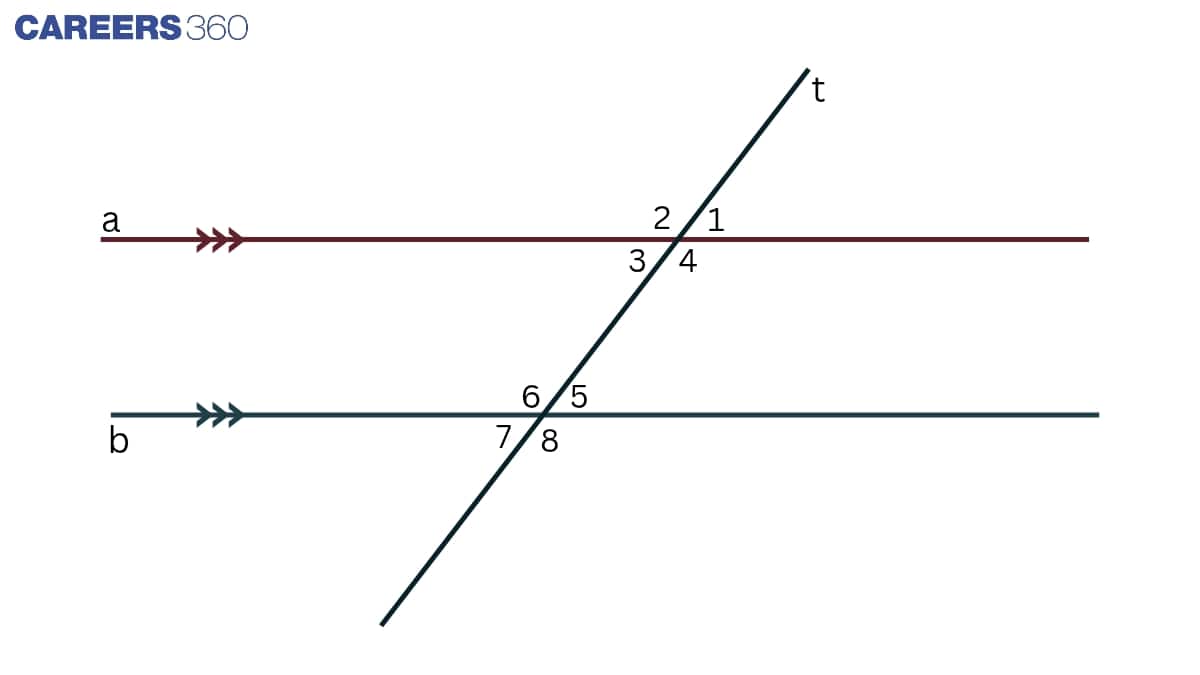
Corresponding angles axiom
When a transversal intersects two parallel lines, then the Corresponding Angles are Equal.
Converse of the Corresponding Angles Axiom
When a transversal line intersects two lines and the Corresponding Angles are equal, then the lines are parallel to each other.
Alternate Interior Angle Axiom
When a transversal intersects two parallel lines, then the pair of alternate interior angles is equal.
Converse of Alternate Interior Angle Axiom
When a transversal line intersects two lines and the alternate interior angles are equal, then the lines are parallel to each other.
The Sum of the Co-interior Angles is Supplementary Axiom:
When a transversal intersects two parallel lines, then the pair of interior angles on the same side of the transversal line are supplementary, i.e. equal to 180°.
The Converse of the sum of the Co-interior angles is supplementary Axiom
When a transversal line intersects two lines and the interior angles on the same side of the transversal line are supplementary, then the lines are parallel to each other.
How to Use the Lines and Angles Class 9 Notes Effectively?
Lines and Angles become easy when we clearly understand the basic terms and how different angles are formed. This chapter in Class 9 explains intersecting lines, pairs of angles, and parallel lines in a simple way. If we revise these notes efficiently, solving geometry questions becomes much easier. Here are some more points on how these notes are important.
- Learn the basic terms and angle types first, then look at the figures to understand how each angle is formed.
- Keep a small notebook to write quick summaries of angle pairs, such as complementary, supplementary, and vertically opposite angles.
- Refer to the NCERT Class 9 Maths Chapter 6 notes while solving problems, so we can check angle rules and avoid confusion.
- Use the NCERT Class 9 Maths chapter 6 notes to build a strong base, because these angle concepts are used again in higher classes, especially in triangles and other geometry chapters.
NCERT Class 9 Maths Notes – Chapter-Wise Links
For students' preparation, Careers360 has gathered all Class 9 Maths NCERT notes here for quick and convenient access.
|
NCERT Notes Class 9 Maths Chapter 4 Linear Equations in Two Variables |
|
NCERT Notes Class 9 Maths Chapter 5 Introduction To Euclid’s Geometry |
|
NCERT Notes Class 9 Maths Chapter 6 Lines and Angles |
|
NCERT Notes Class 9 Maths Chapter 11 Surface Areas and Volumes |
NCERT Solutions for Class 9
Students must check the NCERT solutions for Class 9 Maths and Science given below:
NCERT Exemplar Solutions for Class 9
Students must check the NCERT exemplar solutions for Class 9 Maths and Science given below:
NCERT Books and Syllabus
As students step into a new class, they must first explore the latest syllabus to identify the chapters included. Below are the links to the most recent syllabus and essential reference books.
- NCERT Books Class 9 Maths
- NCERT Syllabus Class 9 Maths
- NCERT Books Class 9
- NCERT Syllabus Class 9
- NCERT Books for Class 9 Science

Popular Questions
A block of mass 0.50 kg is moving with a speed of 2.00 ms-1 on a smooth surface. It strikes another mass of 1.00 kg and then they move together as a single body. The energy loss during the collision is
| Option 1)
|
Option 2)
|
| Option 3)
|
Option 4)
|
An athlete in the olympic games covers a distance of 100 m in 10 s. His kinetic energy can be estimated to be in the range
| Option 1)
|
Option 2)
|
| Option 3)
|
Option 4)
|
A particle is projected at 600 to the horizontal with a kinetic energy . The kinetic energy at the highest point
| Option 1)
|
Option 2)
|
| Option 3)
|
Option 4)
|
In the reaction,
| Option 1)
|
Option 2)
|
| Option 3)
|
Option 4)
|
How many moles of magnesium phosphate, will contain 0.25 mole of oxygen atoms?
| Option 1)
0.02 |
Option 2)
3.125 × 10⁻² |
| Option 3)
1.25 × 10⁻² |
Option 4)
2.5 × 10⁻² |