KCC Institute of Legal and Higher Education, Greater Noida
Law Admissions 2026 Open | Avail Merit-Based Scholarships


Diwali is also known as Deepawali or the Festival of Lights. It is mainly a Hindu festival celebrated by lighting oil lamps and setting off rockets and crackers. In India, several festivals are celebrated with great enthusiasm. Every year, Diwali is celebrated uniquely. This year, it will be celebrated on October 20, 2025. Below are a few sample essays on my favourite festival, Diwali. Students can use the information to write a paragraph on the favourite festival, Diwali.
This Story also Contains
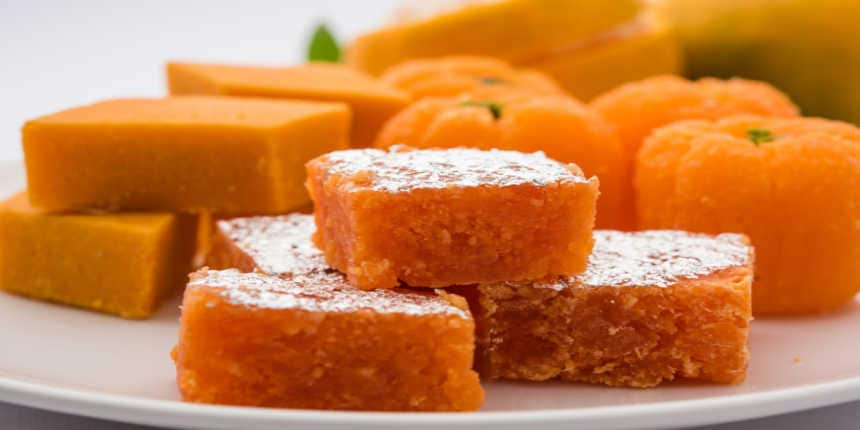
This year, Diwali falls on October 20, 2025. Below, we have provided the time for Diwali Puja as per The Times of India.
On October 20, 2025, the entire country will celebrate Diwali. It is often also known as the "Festival of Lights," and is enjoyed by lighting diyas and setting off rockets and crackers. It is a celebration honouring Lord Rama's glorious return to Ayodhya after rescuing his wife Sita from the demonic king Ravana. We use clay oil lamps called diyas to light up our home. We light them using a cotton wick dipped in ghee or oil. Diwali represents the defeat of evil and the eradication of darkness. We also enjoy sharing sweets with our loved ones. For me, igniting sparklers with my family is my personal favourite part. I love spending Diwali with my family and friends, we all dress in traditional indian clothing on the big day and wish each other happy Diwali.
Law Admissions 2026 Open | Avail Merit-Based Scholarships
BBA/MBA/PGDM Early Bird Applications Deadline 19th Oct '26. Apply now using coupon code CAREER250 and get ₹250 off the application fee
Get your results instantly with our calculator!
Every year, I eagerly anticipate my favourite holiday, Diwali. It is observed in October or even early November. For this occasion, we have holidays from school. Dhanteras marks the start of Diwali festivities. People buy silver and gold goods as well as kitchenware on this day. These days, there are huge crowds in the market. The following day is observed as Choti Diwali or Narak Chaturdashi. People clean up their homes and remove excess garbage. During this event, it is stated that Goddess Laxmi visits our home. People use rangoli and beautiful lights to decorate their homes.
Goddess Laxmi and Lord Ganesha are worshipped on the festival of Diwali. Earthen lamps and candles are lit in the evening. On the night of Diwali, the entire area appears bright and luminous. Additionally, gifts and sweets are exchanged between people. Diwali is observed because Lord Rama returned to his throne on this day after spending fourteen years in exile. Govardhan Puja occurs the day after Diwali, and subsequently, Bhai Dooj is observed. Sisters pray for their brothers' safety and happiness on this day. Deepavali serves as a reminder of the value of peace, unity, and generational values. Everyone comes together to celebrate, give and receive gifts, and pray for wealth, happiness and prosperity.
My favourite festival is Diwali. Every region of India celebrates this festival of lights. The Sanskrit word Deepavali, which signifies a row of lights, is where the word Diwali originates. Deep means "bright," while avali means "a row." One of the biggest festivals of Diwali is celebrated with warmth, joy, and dazzling splendour throughout South-East Asia and India. People burn lamps and diyas all around their homes and workplaces to celebrate this occasion. It also represents the triumph of light over darkness. Diwali is typically celebrated in October or November, 20 days following Dussehra, as predicted by the stars. It is observed during the Hindu lunar month of Kartika.
This festival is connected to several stories. One tale from northern India describes the legend of King Rama, one of the Hindu god Vishnu's avatars. An old epic called the Ramayana claims that Rama conquered the demon Ravana, who had abducted his wife Sita and returned to his home after spending fourteen years in exile. People greeted him by lighting diyas when he arrived in Ayodhya, his kingdom. The Hindu god Krishna is said to have rescued sixteen thousand ladies from the evil monarch Narakasura, which is another well-known tale from southern India. Diwali is about the great victory of good over evil in both stories. Goddess Lakshmi and God Ganesh are also honoured and worshipped on Diwali.
Significance | The Diwali festival represents the victory of good over evil, knowledge over ignorance, and right over wrong. It is a moment of great spiritual significance since it means illuminating our inner light and sharing it with others.
With my family, I visit the temple in the morning on the day of Diwali, wearing new Indian traditional clothes and worship the goddess Laxmi and the god Ganesha in the evening. We light candles and clay lamps to beautify the house after puja. Then, my siblings, friends, and I enjoy sparklers and firecrackers. Although these fireworks are bad for the environment, we attempt to celebrate Diwali wisely. We all eat our dinner and sweets together. We also celebrate Govardhan Puja and Bhai Dooj after Diwali.
Deepavali is a time for refreshing and reviving all of one's energies, celebrated with great faith and devotion. To welcome energies of riches, success, and well-being into their lives, people begin preparations for this occasion days in advance by cleaning, remodelling, and decorating their houses and places of employment with flowers, vibrant glow lights, and numerous elaborate decorations. Family members also perform religious rituals and ignite candles and oil lamps.
The primary festive night of Diwali falls on the night of the new moon, and celebrations often last over five days. Dhanteras starts off the celebration, which continues with Naraka Chaturdasi, also known as Choti Diwali, and ends with Diwali on the third day. The fourth day of the five-day festival is then dedicated to Diwali Padva or Govardhan Puja, and the fifth and final day is Bhai-Duj. The festival's days each have their unique importance.
Among many other festivals, Diwali is my favourite. Because for me it is more than just a festival. It is a celebration of goodness. It reminds us of the importance of hope and kindness. Diwali is the festival that reminds us that goodness will always win over evil and there will always be light after darkness. It encourages us to reflect on our actions and gives us the strength to let go of past negativity and embrace new beginnings with positivity.
Diwali, also known as the "Festival of Lights" is a celebration of life, love and togetherness because it brings everyone together and fills our hearts with joy and happiness. People decorate their houses with lights and diyas and make rangolis. It is a five-day festival. Diwali is celebrated to mark the return of Lord Rama to Ayodhya after defeating the demon king Ravana. Hence, it symbolises the victory of good over evil, light over darkness and hope over despair for the people of India.
Also, read


Law Admissions 2026 Open | Avail Merit-Based Scholarships
BBA/MBA/PGDM Early Bird Applications Deadline 19th Oct '26. Apply now using coupon code CAREER250 and get ₹250 off the application fee
Ranked #36 amongst institutions in Management by NIRF | 100% Placement
Globally Recognized by AACSB (US) & AMBA (UK) | 18 LPA Avg. CTC for PGPM 2026
Leading Design College | 95% Placement Record | Merit-cum-Means Scholarships for Deserving Students
NEET PG All India & State College Predictor with Admission Process Guide